
Sustainability · 2025
In this section49 topics
- Sustainability Policy2 items
- Sustainability Goals & UN SDGs3 items
- Policy Review2 items
- Business Value Chain1 item
- Stakeholder Analysis1 item
- Environmental Policy & Guidelines5 items
- Environmental Policy Review1 item
- Energy — Plan & Guidelines2 items
- Energy — Electricity Consumption1 item
- Energy — Fuel Consumption1 item
- Energy — Targets2 items
- Energy — Performance & Outcomes2 items
- Water — Plan & Guidelines2 items
- Water — Withdrawal, Discharge & Consumption1 item
- Water — Targets1 item
- Water — Performance & Outcomes2 items
- Waste — Plan & Guidelines2 items
- Waste — Generation, Disposal & Recycling1 item
- Waste — Targets1 item
- Waste — Performance & Outcomes2 items
- GHG — Plan & Guidelines2 items
- GHG — Emissions1 item
- GHG — Emissions Verification1 item
- GHG — Principles & Standards1 item
- GHG — Targets1 item
- GHG Targets — Other Targets2 items
- GHG — Performance & Outcomes2 items
- Environmental Legal Incidents1 item
- Social Policy & Guidelines5 items
- Social Policy Review3 items
- Social — Principles & Standards Practised1 item
- Human Rights Due Diligence2 items
- Employees — Plan & Guidelines3 items
- Employees — Workforce2 items
- Employees — Remuneration & Provident Fund1 item
- Employees — Training & Development1 item
- Employees — Occupational Health & Safety1 item
- Employees — Labour Relations1 item
- Employees — Employee Representation2 items
- Employees — Targets2 items
- Employees — Performance & Outcomes2 items
- Customers — Plan & Guidelines3 items
- Customers — Satisfaction Results1 item
- Customers — Targets2 items
- Customers — Performance & Outcomes2 items
- Community & Social — Plan & Guidelines3 items
- Community & Social — Targets2 items
- Community & Social — Performance & Outcomes2 items
- Law Violation Incidents1 item
Sustainability Policy
Has a Sustainability Policy
Yes
Policy Description
The Company operates as a fully integrated construction contractor, with a primary focus on large-scale construction projects. In addition, the Company plans to expand its business into high-potential sectors, including the natural resources and energy businesses, under the purpose of “Building ASEAN growth for the next generation.” The Company is committed to enhancing its operational processes to be environmentally responsible while delivering value to society and strengthening its competitive capabilities under the principles of integrity and ethical conduct. These efforts support the Company’s vision of “Become a top-tier developer of sustainable energy and natural resource-based projects.”
To reflect its commitment to sustainable business growth, the Company has established a sustainability policy by adopting the principles of the United Nations Sustainable Development Goals (SDGs) as a guiding framework for defining operational practices. The policy focuses on mitigating environmental impacts, safeguarding labor and local communities, and conducting business under the principles of Environmental, Social, and Governance (ESG). All sustainability-related policies are approved and signed by the Chief Executive Officer and are applicable to employees at all levels of the organization.
The Company is in the process of developing its sustainability performance monitoring approach, with the aim of establishing structured key performance indicators and reporting mechanisms in alignment with its material sustainability topics in the future.
Environmental Policy
The Company recognizes the importance of managing environmental issues arising from construction project operations, particularly in relation to resource consumption, construction materials, waste generation, and environmental impacts within project areas. Accordingly, the Company has established environmental practices under its Corporate Social Responsibility Policy, Section 6: Environmental Protection, with an emphasis on efficient resource utilization and the reuse of surplus construction materials. Initial efforts focus on managing construction waste generated from construction projects and controlling environmental impacts within project areas while ensuring strict compliance with applicable environmental laws and regulatory requirements.
In addition, the Company is considering initiating a study on a Sustainable Construction Framework to serve as a reference for future project implementation. This framework would address key issues such as the selection of construction materials with lower environmental impacts, waste management practices at construction projects, and the avoidance of materials that may pose environmental or safety risks.
Social Policy
The Company has established a Corporate Social Responsibility (CSR) Policy as a guiding framework for responsible business conduct. The Company recognizes the importance of respecting human rights, ensuring proper labor management, and maintaining constructive relationships with stakeholders in project areas.
The Company places strong emphasis on the management of both its direct employees and subcontracted workers to ensure that operations are conducted appropriately and in compliance with applicable labor laws and occupational health and safety standards. In addition, the Company has established occupational health and safety policies, as well as initiatives to enhance employee engagement, in order to support a safe working environment and improve operational efficiency across projects.
The Company regularly reviews its social management approach and is currently in the process of developing a human rights framework aligned with internationally recognized practices. This is intended to further strengthen the clarity and systematic implementation of human rights management in the future.
Corporate Governance and Economic Policy
The Company acknowledges that sound corporate governance is a critical factor in building confidence among shareholders, investors, and other stakeholders. Accordingly, the Company has established corporate governance policies and practices aligned with the Principles of Good Corporate Governance for Listed Companies prescribed by the Stock Exchange of Thailand. These include an anti-corruption policy, a corruption risk management policy, and policies governing related-party transactions, to support transparent and ethical business operations.
From an economic perspective, the Company places importance on sustainable supply chain management, particularly in relation to subcontractors and business partners, who play a critical role in the successful execution of construction projects. The Company is in the process of developing a Vendor Code of Conduct to serve as a guideline for environmental, social, and governance practices, and expects its business partners to comply with these principles throughout the course of their business relationships with the Company.
In addition, the Company recognizes the importance of promoting sustainable practices across its value chain and is currently considering appropriate approaches to communicate ESG requirements and expectations to its business partners, with the aim of enhancing shared standards of performance over time.
The Company places importance on fair treatment of creditors as part of its good corporate governance practices and its commitment to balanced stakeholder management. This includes adherence to contractual obligations, prudent liquidity management, and timely debt repayment, in order to maintain financial credibility and stability.
Sustainability Governance
Sustainability management at PSGC is coordinated through an internal sustainability working team. The team is led by the Director of Investor Relations and is responsible for coordinating sustainability initiatives, data collection, and sustainability reporting across the organization. The working team reports directly to the Chief Executive Officer (CEO), who provides guidance and oversight on the Company’s sustainability direction and priorities. This structure supports the integration of sustainability considerations into the Company’s operations and strategic planning.
Sustainability Strategy
In 2025, the Company continued to implement action plans and performance indicators derived from the sustainability strategy initiated in 2024, with a focus on aligning sustainability practices with the context of construction operations and overseas project management. The Company’s sustainability strategy comprises two key components:
• Part 1: Sustainability Aspiration
The Company defines its sustainability goals and operational approaches in alignment with its vision, mission, and corporate policies, covering environmental, social, and governance dimensions. These goals are linked to the Company’s material sustainability topics, which are identified through the assessment of impacts arising from construction project operations, stakeholder engagement, and industry context analysis. This process enables management to validate and determine strategic directions that are appropriate to the Company’s operating environment, opportunities, and business risks.
The Company’s sustainability aspirations encompass the following three dimensions:
Environmental: Enhancing environmentally responsible operational processes and reducing negative environmental impacts to contribute to addressing climate change.
Social: Delivering social value by fostering a positive working environment, strengthening human capital capabilities, and improving the quality of life of communities in project areas.
Governance and Economic: Upholding transparent and ethical business practices while enhancing competitiveness to respond effectively to change.
• Part 2: Key enablers to enhance the organization's capabilities in achieving sustainability goals.
The Company has identified key internal management enablers that form the foundation for driving effective sustainability performance, including:
1) Sustainability governance
2) Risk and change management
3) Sustainability data management
4) Sustainability disclosure
Action plans and performance indicators have been established to support organizational development and long-term business growth.
Material Sustainability Topics and Impact Boundaries
The Company prepares sustainability disclosures in this annual report with reference to the GRI Sustainability Reporting Standards (GRI Standards), as a framework for presenting information related to the economic, environmental, and social impacts of its business operations. Sustainability disclosure in 2025 represents the foundation-building phase for the Company’s sustainability reporting system, with plans to progressively enhance the scope and alignment with international best practices.
The Company conducts a materiality assessment to identify sustainability topics that are most relevant to its business operations and stakeholders. The assessment process consists of four key steps. First, potential sustainability topics are identified based on industry context, international sustainability standards, and the nature of the Company’s operations. Second, the Company assesses the potential impacts of these topics on the economy, environment, and society. Third, the identified topics are prioritized based on the significance of impacts and the level of importance to stakeholders. Finally, the results of the assessment are reviewed and validated by the Company’s management to ensure alignment with the Company’s business strategy, risk management approach, and long-term sustainability objectives. The results of the assessment are presented in the materiality matrix below.
Through its materiality assessment process, the Company identified materiality topics that reflect the nature of its construction business and the impacts arising from project operations. In 2025, the Company’s material sustainability topics remain consistent with the previous year, as there have been no significant changes in operational characteristics or business context. The Company will continue to periodically review these material topics to ensure alignment with evolving stakeholder expectations (GRI 3-1, 3-2).
The Company recognizes that construction operations, particularly large-scale overseas projects, may generate economic, social, and environmental impacts. In conducting this assessment, the Company considered the impacts of its operations on relevant stakeholders, industry context, sustainability trends, and stakeholder expectations, including those of employees, shareholders, business partners, customers, and local communities.
The impacts associated with the Company’s material sustainability topics may occur across PSGC’s own operations, including headquarters activities and construction projects, as well as through business relationships within the construction value chain. Currently, the Company’s sustainability data collection primarily covers its own operational activities in Thailand and the Lao PDR. Data relating to certain activities within the value chain, such as subcontractors, suppliers, and surrounding communities, may not yet be fully captured. The Company will gradually expand the scope of impact assessment and data collection to cover additional stakeholders and operational areas in the future.
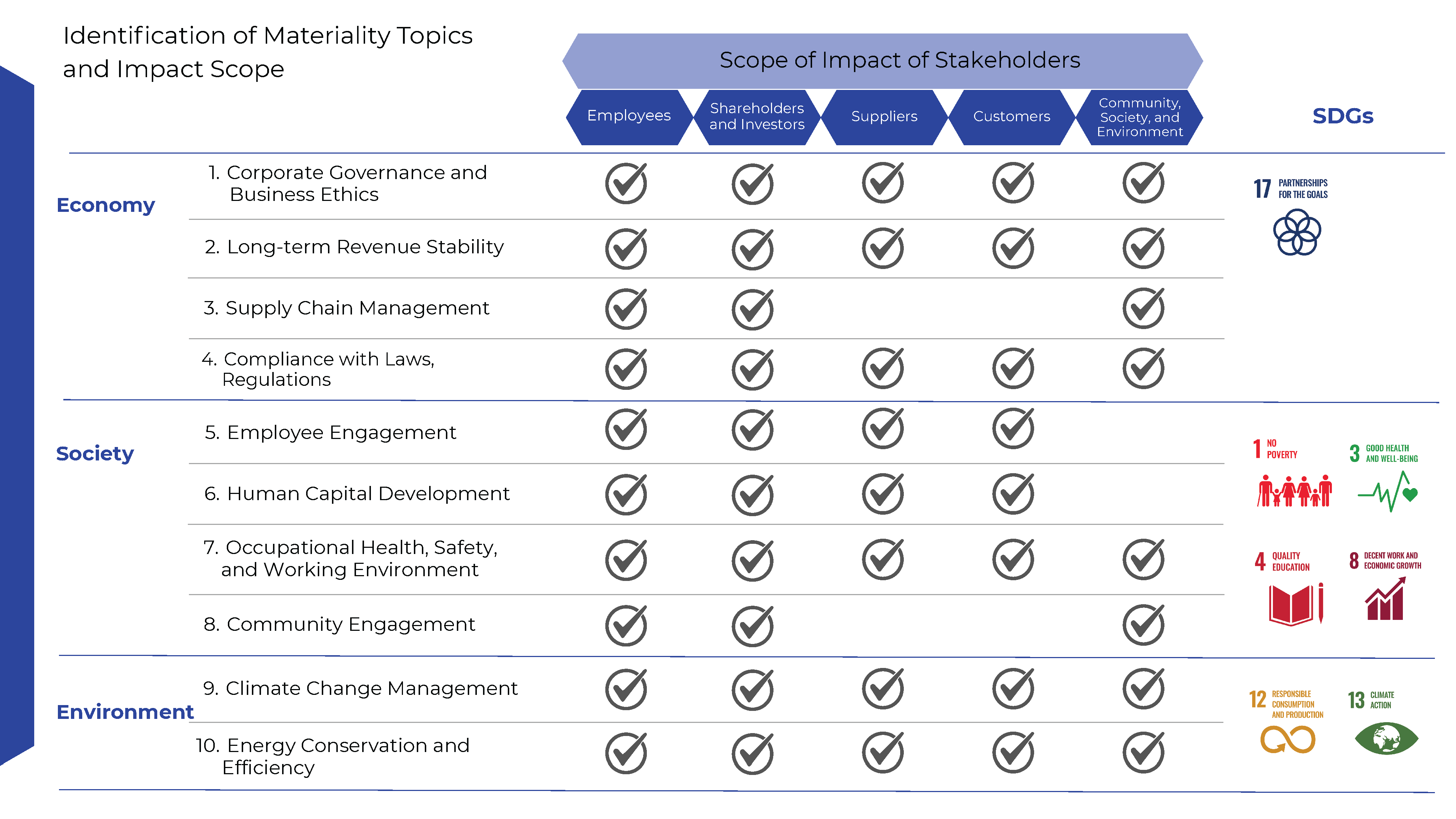 (Figure 3-1: Identification of PSGC’s Material Sustainability Topics and Impact Boundaries)
Description of Material Sustainability Topics
The Company has identified ten material sustainability topics covering economic, social, and environmental dimensions, as follows:
1. Corporate Governance and Business Ethics (Economic)
Strong corporate governance and ethical business conduct are fundamental to PSGC’s operations, particularly given the Company’s involvement in large-scale construction projects with multiple stakeholders. Transparent and ethical practices enhance credibility, mitigate reputational risks, and support long-term business growth.
2. Long-term Revenue Stability (Economic)
Revenue from construction activities is inherently linked to project duration and project execution performance. PSGC therefore emphasizes effective management of ongoing projects and the consideration of appropriate new business opportunities to support revenue continuity and financial stability.
3. Sustainable Supply Chain Management (Economic)
Construction operations rely heavily on subcontractors and business partners. Sustainable supply chain management directly affects work quality, safety performance, and legal compliance. PSGC places importance on the selection and oversight of subcontractors in accordance with legal, safety, and ethical standards.
4. Compliance with Laws, Regulations, and Requirements (Economic)
PSGC operates construction projects overseas, where legal and regulatory frameworks may differ from those in Thailand. Compliance with applicable laws and regulations is therefore critical to minimizing operational risks and ensuring project continuity.
To support effective compliance, the Company has established a subsidiary in the Lao PDR and employs local personnel with knowledge of relevant regulations to facilitate regulatory coordination and oversight.
5. Employee Engagement (Social)
Employees play a key role in managing and supervising construction projects, particularly overseas. Employee engagement supports operational continuity, knowledge retention, and effective project execution.
6. Human Capital Development (Social)
Construction activities require specialized skills and expertise. PSGC emphasizes human capital development, particularly in project management capabilities, technical competencies, and overseas operational experience, to strengthen organizational capacity over the long term.
7. Occupational Health, Safety, and Working Environment (Social)
Given the inherent safety risks associated with large-scale construction projects, PSGC prioritizes occupational health and safety. The Company implements project-level safety measures covering both employees and subcontracted workers, including the application of 4C Safety Behaviors for supervisors and 4 STOP Safety Behaviors for operational personnel.
8. Community Engagement (Social)
Construction projects may affect surrounding communities. PSGC emphasizes stakeholder engagement and communication with local communities to address concerns, manage impacts appropriately, and support smooth project implementation while reducing the potential for conflict.
9. Climate Change Management (Environmental)
Climate change may affect construction operations through weather variability and resource constraints. PSGC recognizes the importance of assessing climate-related impacts associated with its operations to support long-term business sustainability.
10. Energy Conservation and Energy Efficiency (Environmental)
Construction projects involve significant use of machinery and energy. PSGC focuses on improving energy efficiency to reduce operating costs while minimizing environmental impacts associated with resource consumption.
Materiality Matrix
Following the identification of material sustainability topics, the Company prioritized each topic based on
(1) The level of impact on business operations and long-term value creation, assessed based on the severity and likelihood of impacts
(2) The level of importance to stakeholders.
The prioritization process supports the effective allocation of resources, action planning, and the development of sustainability initiatives aligned with the Company’s operating context. Topics assessed as having high importance are used as key inputs for sustainability management and policy development.
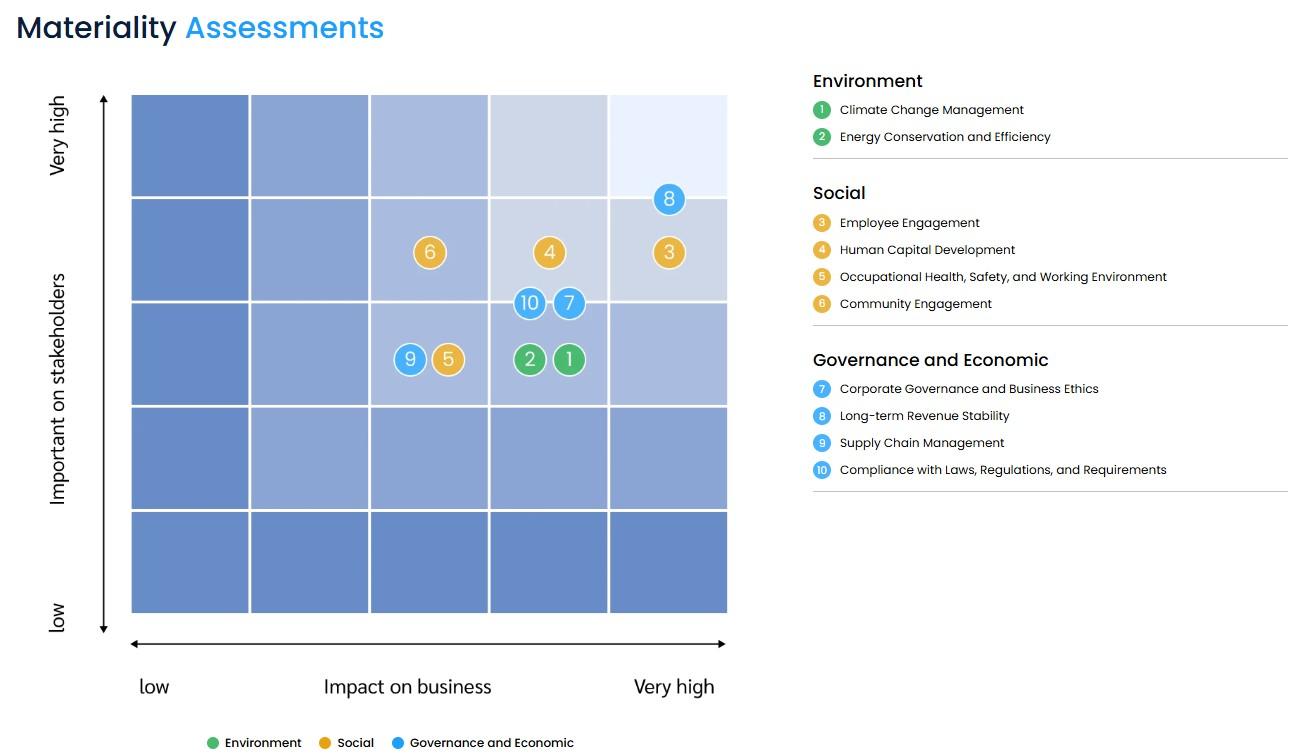 (Figure 3-2: Materiality Matrix of PSGC)
Management of Material Topics (GRI 3-3)
The Company manages its material sustainability topics through relevant policies, operational guidelines, and project management processes aligned with the nature of its construction business. Key focus areas include occupational safety, subcontractor management, community impact management, and transparent business conduct. Performance monitoring and evaluation are conducted through management oversight, internal reporting, and continuous improvement of operational practices to support sustainable long-term growth.
Sustainability Goals & UN SDGs
Has Sustainability Goals
Yes
Goals Description
Following the establishment of the Company’s corporate-level sustainability strategy and implementation plan, sustainability targets have been defined in alignment with the Company’s ten material sustainability topics. These targets are categorized into annual targets and long-term targets for each topic, as detailed below.
Governance and Economic Objectives:
Upholding transparent business practices while enhancing competitiveness to respond to change
1. Corporate Governance and Business Ethics
Annual Targets
Zero cases of violations of the business code of conduct
Performance Results
In 2025, there were zero cases of violations of the business code of conduct were reported
Long-Term Targets (2026 onwards)
Expand the scope of the business code of conduct to incorporate additional sustainability-related issues
2. Long-Term Revenue Stability
Annual Targets
Achieve customer satisfaction exceeding 80% in 2025
Performance Results
In 2025, the average customer satisfaction rate was 86.7%
Long-Term Targets (2026 onwards)
Maintain customer satisfaction at a level not lower than the three-year historical average
3. Supply Chain Management
Annual Targets
Develop ESG screening criteria for new business partners
Performance Results
In 2025, ESG criteria were initiated and integrated into the supplier screening process. The Company will further enhance and refine these ESG criteria in subsequent phases.
Long-Term Targets (2026 onwards)
100% of key suppliers to undergo sustainability capability assessments through onsite audits by 2027
4. Compliance with Laws, Regulations, and Requirements
Annual Targets
Zero cases of non-compliance with labor, environmental, and tax laws and regulations
Performance Results
In 2025, zero cases of non-compliance with labor, environmental, and tax laws and regulations were reported
Long-Term Targets (2026 onwards)
Maintain zero cases of non-compliance with labor, environmental, and tax laws and regulations
Social Objectives:
Delivering social value through a positive working environment, strengthening human capital, and enhancing community well-being
5. Employee Engagement
Annual Targets
Design employee engagement survey questions
Achieve employee participation rate of 60%–65%
Performance Results
The Company is in the process of designing survey questions and assessment tools for measuring employee engagement
Long-Term Targets (2026 onwards)
More than 90% employee participation in the engagement survey
6. Human Capital Development
Annual Targets
Minimum of 12 training hours per employee per year
Zero cases of human rights violations
Performance Results
In 2025, average training hours amounted to 28.9 hours per employee per year
No human rights violations were reported within the Group
Long-Term Targets (2026 onwards)
Identify business and employee benefits derived from human capital development initiatives
More than 90% of Company operations to undergo human rights risk assessments
100% of identified significant human rights issues to have mitigation measures in place
7. Occupational Health, Safety, and Working Environment
Annual Targets
Zero fatalities and zero Lost Time Injury Frequency Rate (LTIFR) for both employees and contractors
Performance Results
In 2025, both the fatality rate and LTIFR for employees and contractors were zero
Long-Term Targets (2026 onwards)
Obtain additional health and safety certifications
8. Community Engagement
Annual Targets
Zero community complaints related to company operations.
Performance Results
In 2025, zero community complaints were reported
Long-Term Targets (2026 onwards)
Community satisfaction rate of at least 80%
Identify business value derived from CSR projects using impact valuation methodologies
Environmental Objectives:
Enhance environmentally responsible operational processes to contribute to addressing climate change.
9. Climate Change Management
Annual Targets
Develop data collection forms for Scope 1 and Scope 2 greenhouse gas (GHG) emissions
Achieve 100% coverage of Scope 1 and Scope 2 GHG data across all operations in Thailand
Reduce Scope 1 GHG emissions by 6% annually
Reduce Scope 2 GHG emissions by 6% annually
Performance Results
Scope 1 and Scope 2 GHG data collection forms were completed
Scope 1 and Scope 2 GHG data covered 100% of operations in Thailand
Replaced four corporate pool and executive vehicles with electric vehicles, representing 80% of the Company’s total vehicle fleet
Long-Term Targets (2026 onwards)
Achieve 100% coverage of Scope 1 and Scope 2 GHG data across all Group operations
Reduce business-as-usual (BAU) greenhouse gas emissions by 30% by 2030
Transition 100% of Company vehicles to electric vehicles by 2030
10. Energy Conservation and Energy Efficiency
Annual Targets
Collect energy consumption data covering 100% of operations in Thailand and the Lao PDR
Reduce energy consumption by 4.5% per year
Performance Results
Energy consumption data covered 100% of operations in Thailand and the Lao PDR
Electricity consumption at the headquarters increased by 9.7% due to the expansion of office space
Long-Term Targets (2026 onwards)
Establish an internal energy management system within 10 years
Commit to achieving 100% renewable energy use by 2050
UN Sustainable Development Goals
| SDG Goal |
|---|
| Goal 1 No Poverty |
| Goal 1 No Poverty |
| Goal 1 No Poverty |
| Goal 3 Good Health and Well-being |
| Goal 3 Good Health and Well-being |
| Goal 3 Good Health and Well-being |
| Goal 4 Quality Education |
| Goal 4 Quality Education |
| Goal 4 Quality Education |
| Goal 8 Decent Work and Economic Growth |
| Goal 8 Decent Work and Economic Growth |
| Goal 8 Decent Work and Economic Growth |
| Goal 12 Responsible Consumption and Production |
| Goal 12 Responsible Consumption and Production |
| Goal 12 Responsible Consumption and Production |
| Goal 13 Climate Action |
| Goal 13 Climate Action |
| Goal 13 Climate Action |
| Goal 17 Partnerships for the Goals |
| Goal 17 Partnerships for the Goals |
| Goal 17 Partnerships for the Goals |
Policy Review
Policy Reviewed This Year
Yes
Policy Changed This Year
No
Business Value Chain
Value Chain Description
Business Value Chain
The Company has identified its business value chain, comprising primary and supporting activities, to drive operations from upstream to downstream. This framework serves as a basis for analyzing the relationships and impacts of various activities on both internal and external stakeholders, enabling the Company to effectively manage such impacts.
Value Chain Activities
The Company's value chain consists of the following components:
1. Primary Activities
1.) Marketing, Project Feasibility Study, and Project Selection
As a provider of construction services, the Company participates in competitive bidding processes for construction projects across various customer segments. Accordingly, it conducts comprehensive project scope evaluations, assesses feasibility and potential, and secures funding sources. Additionally, the Company procures tools, materials, and equipment from business partners and strategic allies to ensure project readiness.
2.) Construction
The Company executes construction projects in accordance with predefined project scopes, incorporating rigorous management across key areas, including budgeting, risk assessment, personnel readiness, construction planning, progress monitoring, and quality control. Furthermore, the Company ensures compliance with legal requirements to mitigate social and environmental impacts.
3.) Project Delivery
Upon completion of a construction project, the Company delivers the final output to the client for inspection, documentation of work acceptance, and performance guarantee assurance.
2. Supporting Activities
Supporting activities enhance the efficiency and effectiveness of primary activities. Key supporting functions include:
• Human Resources Management
• Risk Management
• Procurement and Supply Chain Management
• Accounting and Finance
• Customer Relationship Management
Stakeholder Analysis
Stakeholder Analysis
| Stakeholder Type | Stakeholders | Stakeholder Expectations | Response to Expectations | Communication Activities |
|---|---|---|---|---|
| External stakeholders | 2904 · Description: Investors or investment institutions · 2913 · Description: Shareholders | • Stable and sustainable growth.
• Attractive return on investment.
• Corporate governance, risk management and sound monitoring and control system established.
• Availability of complete, accurate, and up-to-date information. | • Developed a transparent, fair and verifiable corporate governance policy.
• Established a risk management system with regular updates.
• Disclosed information to the public equitably and transparently.
• Maximized the shareholder value.
• Developed code of conduct and strictly prevent the personal use of confidential company’s information.
• Promoted ethical conduct and effectively prevented conflict of interest. | 2939 · Description: Press Release · 2941 · Description: Online Communication · 2944 · Description: Annual General Meeting (AGM) · 2945 · Description: Complaint Reception · 2949 · Other name: ELCID · Description: Others · 2949 · Other name: Website · Description: Others · 2949 · Other name: Investor Relations Channel · Description: Others · 2949 · Other name: Company Snapshot · Description: Others |
| Internal stakeholders | 2921 · Description: Employees | • Attractive remuneration and welfare benefits.
• Safe and healthy workplace.
• Equal opportunities for career growth. | • Offered competitive compensation and welfare benefits.
• Employed a fair performance evaluation system.
• Promoted safe workplace culture.
• Fostered ongoing employee career growth and development.
• Uphold human rights principles. | 2942 · Description: Internal Meeting · 2945 · Description: Complaint Reception · 2946 · Description: Employee Engagement Survey · 2949 · Other name: Activity Board · Description: Others · 2949 · Other name: email · Description: Others |
| External stakeholders | 2899 · Description: Suppliers · 2900 · Description: Business partners · 2918 · Description: Contractors · 2919 · Description: Subcontractors · 2925 · Description: Financial institution | • Fair and equal treatment to partners.
• Strictly following terms and conditions stipulated in the trade agreements.
• Fostering solid and enduring partnerships. | • Fair and transparent supplier selection process, ensuring equal opportunities for all partners.
• Prepare contract form with appropriate trade terms and conditions.
• Pay for the product/service to partners within the specified period.
• Determined developing knowledge sharing with partners, retaining good relationships, and setting clear quality objectives for products and services.
• Adopted Anti-fraud and Corruption policy and adhere to it rigorously. | 2941 · Description: Online Communication · 2943 · Description: External Meeting · 2949 · Other name: Meeting with suppliers · Description: Others |
| External stakeholders | 2923 · Description: Customers | • Strictly adhering to the terms of the contract.
• Having a clear understanding of the work and being flexible in working together to resolve any issues swiftly.
• Ensuring the handover of high-quality projects within the agreed-upon time frame and budget.
• Commitment to ensure a proper warranty is made.
• Working towards establishing and maintaining positive long-term relationships. | • Succeeded in construction quality inspection system based on ISO 9001:2015 standards guaranteed the projects meet customer quality requirements and are completed on time and within budget.
• Adhere to the terms outlined in the contract strictly.
• Adopted Anti-fraud and Corruption policy and all parties abide by it rigorously.
• Dedicated to preserving positive relationships and setting clear quality objectives for worth products/services. | 2941 · Description: Online Communication · 2943 · Description: External Meeting · 2945 · Description: Complaint Reception · 2947 · Description: Satisfaction Survey |
| External stakeholders | 2902 · Description: Community | • Efforts in minimizing construction-related pollution and its impact on communities, society, and the environment.
• Committed to safely conducting construction activities.
• Effort to optimize resource usage efficiently. | • Established the construction concerning the impact on communities, society, and the environment, and strict compliance with all relevant laws and regulations.
• Implemented adequate safety measures for personnel working in the construction area, and enforced the strict adherence.
• Controlled emissions and waste to meet the standards.
• Regularly support creative activities for the community, society and the environment.
• Listen to the opinions and suggestions of communities surrounding the construction site and actively seek ways to mitigate any potential impacts including resolving any complaints quickly. | 2940 · Description: Social Event · 2945 · Description: Complaint Reception |
Environmental Policy & Guidelines
Has an Environmental Policy
Yes
Policy Description
PSGC is committed to minimizing environmental impacts arising from its business operations. To support this commitment, the Company has established an Occupational Health and Safety Policy, together with environmental management practices implemented under the Company’s Corporate Social Responsibility Policy. These policies and practices provide the framework for managing environmental impacts associated with the Company’s operations.
The Company’s environmental management approach covers key environmental aspects, including energy and climate management, waste and pollution control, and water resource management.
The Company conducts its business in alignment with internationally recognized sustainability principles. PSGC aligns its operations with the United Nations Sustainable Development Goals (SDGs) as a guiding framework for its environmental management approach, particularly Goal 12: Responsible Consumption and Production and Goal 13: Climate Action, which support sustainable resource management and proactive responses to climate-related challenges.
PSGC also strictly complies with applicable environmental laws and regulatory requirements. This includes adherence to the Enhancement and Conservation of National Environmental Quality Act, as well as environmental obligations specified in Environmental Impact Assessment (EIA) reports for the Company’s projects.
Efficient resource utilization is another key principle in PSGC’s environmental management approach. The Company promotes the reuse of surplus construction materials wherever feasible in order to reduce environmental impacts. At the same time, PSGC continuously raises awareness among employees, contractors, customers, business partners, and other stakeholders regarding responsible resource use and effective waste management practices.
Environmental awareness and environmental impact mitigation are also integrated into operational practices across the organization. For example, efficient electricity consumption at the Company’s headquarters is incorporated as part of internal operational practices. In addition, PSGC continues to consider the development of a comprehensive environmental management system covering its operations from project planning and construction activities to energy use, waste management, and post-use material handling.
Furthermore, the Company implements measures to control dust and noise emissions at construction sites and surrounding communities, ensuring compliance with applicable environmental laws, regulatory requirements, and relevant operational standards.
Policy Document Link
https://www.psgcorp.co.th/storage/document/cg/corporate-social-responsibilities-policy-th.pdf
Page Number in Report
5
Environmental Guidelines
| Guideline |
|---|
| Electricity Management |
| Fuel Management |
| Renewable/Clean Energy Management |
| Water Management |
| Waste Management |
| Greenhouse Gas and Climate Change Management |
| Air Quality Management |
| Noise Pollution Management |
Environmental Policy Review
Policy Reviewed This Year
No
Energy — Plan & Guidelines
Has an Energy Management Plan
Yes
Plan Description
PSGC is committed to improving energy efficiency and promoting responsible energy management across its operations. Effective energy management not only contributes to cost efficiency but also supports the reduction of environmental impacts and strengthens the Company’s long-term sustainability performance.
The Company’s headquarters is located at AIA Sathorn Tower, an environmentally responsible and energy-efficient building certified under the LEED Platinum standard. This reflects PSGC’s commitment to operating within a workplace environment that prioritizes energy efficiency and environmental responsibility.
In 2024, PSGC continued to implement workplace energy conservation initiatives by encouraging employees to switch off lighting during break periods and reduce electricity consumption in common areas, meeting rooms, and workspaces when not in use. The Company also implemented a work-from-anywhere policy to enhance workplace flexibility while supporting reduced energy consumption associated with office operations and commuting.
In 2025, PSGC further strengthened its energy efficiency initiatives by transitioning its corporate and executive vehicles used at the headquarters in Thailand to electric vehicles (EVs), totaling four vehicles. This initiative supports cleaner energy use and contributes to reducing greenhouse gas emissions associated with transportation.
In addition, the Company continues to explore opportunities to improve energy efficiency across its offices and operational facilities beyond the headquarters, including the gradual upgrade of IT equipment and electrical appliances to higher energy-efficiency standards.
To further enhance its energy management practices, PSGC expanded the scope of energy consumption data collection in 2025 to cover all construction sites and operational locations in Thailand and the Lao PDR. This initiative aims to establish a comprehensive energy baseline that accurately reflects the Company’s energy consumption across its operational activities.
The collected data will be used to analyze energy consumption patterns and identify opportunities to improve energy efficiency throughout the organization. Once a comprehensive energy baseline has been established, PSGC will utilize the data to define measurable energy reduction targets and implement initiatives aimed at improving operational efficiency and reducing overall energy consumption, in alignment with relevant national and international sustainability frameworks.
Through these initiatives, PSGC seeks to continuously improve energy efficiency while supporting environmentally responsible operations and sustainable business growth over the long term.
Energy — Electricity Consumption
Electricity Consumption
| Metric | Current Year | Previous Year | Two Years Ago |
|---|---|---|---|
| Total electricity consumption within the organization (Kilowatt-Hours) | 176,774 | 155,775 | 32,484 |
| Electricity purchased for consumption from non-renewable energy sources (Kilowatt-Hours) | 176,774 | 155,775 | 32,484 |
| Electricity purchased or generated for consumption from renewable energy sources (Kilowatt-Hours) |
Energy — Fuel Consumption
Fuel Consumption
| Metric | Current Year | Previous Year | Two Years Ago |
|---|---|---|---|
| Crude oil (Barrels) | |||
| Coal (Metric tonnes) | |||
| Jet fuel (Litres) | |||
| Diesel (Litres) | 48,056 | 37,566 | |
| Gasoline (Litres) | 1,189 | 6,765 | 1,329.1 |
| Fuel oil (Litres) | |||
| Natural gas (Standard cubic feet) | |||
| LPG (Kilograms) | 1,005 | 450 | 0 |
| Steam (Metric tonnes) |
Energy — Targets
Has Set Targets
Yes
Targets
| Target | Base Year | Target Year | Target Change (%) | Unit |
|---|---|---|---|---|
| Reduction of fuel consumption | 2,025 | 2,030 | 10 | Litres |
Energy — Performance & Outcomes
Has Performance Results
Yes
Performance Description
In 2025, PSGC expanded the scope of electricity consumption data collection to cover both electricity consumption at the Company’s headquarters in Thailand and electricity consumption associated with its construction projects in the Lao PDR.
Based on the collected data, total electricity consumption for the year amounted to 176,774 kWh, consisting of 51,140 kWh in Thailand and 125,634 kWh in the Lao PDR.
Electricity consumption in Thailand included 40,209 kWh used at the Company’s headquarters and 10,931 kWh associated with electricity consumption from electric vehicles (EVs) used as corporate and executive vehicles. Electricity consumption from construction project operations in the Lao PDR totaled 125,634 kWh.
Overall electricity consumption in 2025 increased by 13.5% compared with 2024. However, the scope of electricity data collection in 2025 differs from that of the previous year, as the Company expanded its data coverage to include additional operational areas. In addition, PSGC relocated its headquarters to a new office with a larger usable area and transitioned part of its corporate fleet to electric vehicles. These factors contributed to a structural increase in electricity consumption during the reporting period.
To ensure an appropriate year-on-year comparison, electricity consumption at the headquarters in Thailand was analyzed separately. Electricity consumption at the headquarters totaled 40,209 kWh in 2025, representing an increase of 9.6% compared with 2024. This increase was primarily attributable to operational changes, including an increase in the number of employees and the expansion of office space.
Data Notes
The Company transitioned from conventional vehicles to four electric vehicles (EVs) beginning in February 2025.
PSGC relocated its headquarters in April 2025, resulting in an increase in office space and potentially higher electricity consumption associated with the expanded facility.
The Resettlement construction project expanded its construction area during 2025. As a result, an additional temporary project office was established near the construction site, and electricity consumption from this location began to be recorded from mid-2025.
Water — Plan & Guidelines
Has a Water Management Plan
Yes
Plan Description
PSGC recognizes the importance of responsible water use, as water is a critical resource for both construction activities and office operations. The Company has therefore established water management practices across its operational areas, including the headquarters and construction project sites, to promote efficient water use and minimize unnecessary consumption.
PSGC has developed water management practices covering both office operations and project activities. These practices aim to promote responsible water use while minimizing water loss. Key measures include encouraging employees and contractors to use water efficiently, optimizing water consumption during construction activities, and conducting regular inspections of water supply systems and related equipment to ensure operational efficiency and prevent unnecessary water loss.
At the Company’s headquarters, PSGC promotes responsible water use among employees and conducts regular inspections of plumbing systems and related equipment to maintain system efficiency and prevent leakage.
Within construction projects, water is used for operational purposes associated with construction activities. In particular, water spraying is applied along roads and transportation routes within project areas to suppress dust and mitigate potential impacts on nearby communities. In most cases, water used for these activities is sourced from public water sources available in the surrounding areas.
PSGC monitors water consumption within project areas to ensure that water resources are used appropriately and efficiently while minimizing potential impacts on local water resources and surrounding communities.
Water — Withdrawal, Discharge & Consumption
Water Withdrawal, Discharge & Consumption
| Metric | Current Year | Previous Year | Two Years Ago |
|---|---|---|---|
| Total water withdrawal (Cubic meters) | 67 | 60 | 53 |
| Total water withdrawal by third-party water (Cubic meters) | 67 | 60 | 53 |
| Total water withdrawal by surface water (Cubic meters) | |||
| Total water withdrawal by groundwater (Cubic meters) | |||
| Total water withdrawal by seawater (Cubic meters) | |||
| Total water withdrawal by produced water (Cubic meters) | |||
| Percentage of wastewater treated before discharge (%) | |||
| Total water discharge (Cubic meters) | 53.6 | 48 | 42.4 |
| Total water discharge to third-party water (Cubic meters) | |||
| Total water discharge to surface water (Cubic meters) | |||
| Total water discharge to groundwater (Cubic meters) | |||
| Total water discharge to seawater (Cubic meters) | |||
| Total water consumption (Cubic meters) | 13.4 | 12 | 10.6 |
| Recycled water (Cubic meters) |
Water — Targets
Has Set Targets
No
Water — Performance & Outcomes
Has Performance Results
Yes
Performance Description
In 2025, PSGC initiated the collection and reporting of water consumption data, with the reporting boundary covering water consumption at the Company’s headquarters in Thailand. Water consumption associated with construction projects located outside Thailand has not yet been included within the current reporting scope.
Based on the collected data, total water consumption at the headquarters amounted to 67 cubic meters (m3) in 2025, representing an increase of 11.7% compared with 2024.
The change in water consumption was primarily attributable to operational adjustments within the office. In May 2025, the Company installed a drinking water filtration system at the headquarters with the objective of reducing the purchase of bottled drinking water. This initiative forms part of PSGC’s broader approach to improving resource efficiency while reducing waste generated from plastic packaging.
PSGC plans to further enhance its water data management practices by gradually expanding the scope of water consumption data collection to cover additional operational areas in the future. This will support more comprehensive monitoring and management of the Company’s water resources in alignment with its environmental management practices.
Waste — Plan & Guidelines
Has a Waste Management Plan
Yes
Plan Description
PSGC recognizes the importance of responsible waste management as part of its environmental stewardship and resource efficiency practices. The Company is committed to minimizing waste generated from its operations while promoting appropriate waste segregation and recycling practices to reduce environmental impacts.
Waste management activities are conducted in compliance with applicable environmental laws and regulations, including the Enhancement and Conservation of National Environmental Quality Act, as well as relevant requirements issued by the Pollution Control Department.
The Company adopts a waste management approach that prioritizes waste reduction, proper waste segregation, and the reuse or recycling of materials where possible, with the objective of minimizing environmental impacts and improving resource efficiency across its operations.
Waste — Generation, Disposal & Recycling
Waste Generation, Disposal & Recycling
| Metric | Current Year | Previous Year |
|---|---|---|
| Total waste generated (Kilograms) | 2,274.5 | 1,383 |
| Non-hazardous waste (Kilograms) | 2,273.5 | 1,377.5 |
| Non-hazardous waste - Landfilling (Kilograms) | ||
| Non-hazardous waste - Incineration (with energy recovery) (Kilograms) | ||
| Non-hazardous waste - Incineration (without energy recovery) (Kilograms) | ||
| Non-hazardous waste - Other disposal operations (Kilograms) | ||
| Hazardous waste (Kilograms) | 1 | 5.5 |
| Hazardous waste - Landfilling (Kilograms) | ||
| Hazardous waste - Incineration (with energy recovery) (Kilograms) | ||
| Hazardous waste - Incineration (without energy recovery) (Kilograms) | ||
| Hazardous waste - Other disposal operations (Kilograms) | ||
| Total reused/recycled waste (Kilograms) | ||
| Reused/Recycled non-hazardous waste (Kilograms) | ||
| Reused non-hazardous waste (Kilograms) | ||
| Recycled non-hazardous waste (Kilograms) | ||
| Reused/Recycled hazardous waste (Kilograms) | ||
| Reused hazardous waste (Kilograms) | ||
| Recycled hazardous waste (Kilograms) |
Waste — Targets
Has Set Targets
No
Waste — Performance & Outcomes
Has Performance Results
Yes
Performance Description
PSGC encourages employees to participate in initiatives that promote efficient resource use and waste reduction across the organization. The Company previously participated in the “Ting To Trash” waste segregation initiative, organized by the Securities and Exchange Commission of Thailand (SEC) and the Thai Listed Companies Association. The initiative aimed to enhance awareness among listed companies regarding proper waste segregation practices and to foster a corporate culture that supports greenhouse gas reduction.
Although the program concluded in 2024, PSGC continues to implement waste segregation activities within the organization. The Company also promotes responsible resource consumption through internal campaigns, such as encouraging double-sided printing and adopting digital systems and information technology solutions to reduce paper usage in daily operations.
On 30 May 2025, PSGC received a certificate of recognition from the Thai Listed Companies Association in recognition of its participation in the “Ting To Trash” initiative. The program promotes waste management at the source through proper waste segregation, reduction of landfill waste, and the use of digital tools to support efficient waste data collection and management. Participation in this initiative has also helped strengthen employee engagement in responsible resource use and waste segregation practices across the organization.
For 2025, waste data collection covers operations at the Company’s headquarters in Thailand only, and does not yet include waste generated from construction projects located outside Thailand.
Waste generated from headquarters operations during 2025 is summarized as follows:
General waste: 1,604.5 kilograms, averaging 133.7 kilograms per month, representing an increase of 69.3% compared with the previous year
Food waste: 512.0 kilograms, averaging 42.7 kilograms per month, representing an increase of 19.1% year-on-year
Recyclable waste (plastic and paper): 157.0 kilograms, averaging 13.1 kilograms per month, representing a decrease of 35.5% compared with the previous year
Hazardous waste: 1.0 kilogram for the entire year
Changes in waste volumes in 2025 partly reflect increased office activities and employee numbers, as well as improvements in the Company’s environmental data collection practices.
Looking ahead, PSGC plans to further develop its waste data management system by gradually expanding the scope of data collection to cover additional operational areas of the Company. This will support more effective monitoring and management of waste streams across the organization.
GHG — Plan & Guidelines
Has a GHG Management Plan
Yes
Plan Description
PSGC recognizes the challenges posed by climate change, which may affect the Company’s long-term business operations. Climate variability and extreme weather conditions may influence the execution of construction projects and other business activities in the future. The Company therefore places importance on greenhouse gas (GHG) management and supports the achievement of United Nations Sustainable Development Goal 13 (Climate Action), which calls for urgent action to address climate change and its impacts.
At the same time, the Company is exploring opportunities to expand its business into the natural resources and energy sectors. Currently, feasibility studies are being conducted for potential investments in Pumped Storage Hydropower (PSH) projects. The Company is also preparing to commence business activities related to coal mine services and maintenance, coal processing, material handling, and coal transportation, as well as the procurement of coal from the XPPL coal mine in the Lao PDR for commercial distribution in both the Lao PDR and Vietnam through the Company’s subsidiary.
PSGC recognizes that these business activities may be associated with greenhouse gas management considerations in the future. The Company therefore intends to conduct its operations with due consideration for internationally recognized environmental standards and potential climate-related impacts. Emissions associated with these business activities will be monitored and assessed, and relevant information will be disclosed in future sustainability reporting.
The Company places importance on developing a comprehensive Greenhouse Gas Inventory to enhance the completeness and coverage of its greenhouse gas emissions data. In 2025, the Company expanded the scope of greenhouse gas data collection for both direct emissions (Scope 1) and indirect emissions from energy consumption (Scope 2) to cover a broader range of operational areas. This expanded coverage includes the Company’s operations in Thailand and the Lao PDR, as well as construction sites and other operational facilities, in order to ensure that the collected data accurately reflects the Company’s overall operational activities.
The collected data will be used to establish a baseline year for the Company’s future greenhouse gas emission reduction targets. PSGC plans to conduct GHG data verification prior to announcing its greenhouse gas management and emission reduction plans, which will be aligned with national climate-related targets.
In addition, the Company is considering expanding its data collection to include other indirect greenhouse gas emissions (Scope 3), covering relevant operational activities such as support functions at the headquarters, construction site activities, and other operational functions. Emission data from these sources will be analyzed to support the development of future policies, measures, and emission reduction initiatives.
GHG — Emissions
GHG Emissions
| Metric | Current Year | Previous Year | Two Years Ago |
|---|---|---|---|
| Total GHG emissions (Metric tonnes of carbon dioxide equivalent) | 233.6 | 213 | 24.13 |
| Total greenhouse gas emissions 1 (Metric tonnes of carbon dioxide equivalent) | 143.8 | 128.7 | 2.98 |
| Total greenhouse gas emissions 2 (Metric tonnes of carbon dioxide equivalent) | 89.8 | 84.3 | 21.04 |
| Total greenhouse gas emissions 3 (Metric tonnes of carbon dioxide equivalent) | 0.11 |
GHG — Emissions Verification
Emissions Verified by a Third Party
No
GHG — Principles & Standards
Principles & Standards Applied
| Standard |
|---|
| 2671 |
| 2672 |
GHG — Targets
Has Set GHG Targets
Yes
GHG Targets — Other Targets
Introduction
At the initial stage of developing the Company’s greenhouse gas inventory, PSGC has established an emission reduction target based on operational areas where emissions data can currently be monitored. The current reporting boundary covers the Company’s operations in both Thailand and the Lao PDR. However, the scope of data collection may not yet fully cover all operational activities across every location, as the Company is still in the process of further developing its greenhouse gas data management system to enhance data completeness.
In 2025, the Company reported total greenhouse gas emissions of 233.6 tonnes of carbon dioxide equivalent (tCO2e) from Scope 1 and Scope 2 emissions. The Company has designated 2025 as its baseline year for establishing future greenhouse gas emission reduction targets.
PSGC has set an initial target to reduce Scope 1 and Scope 2 greenhouse gas emissions by 10% from the 2025 baseline year. This target represents an initial step in the Company’s greenhouse gas management efforts.
Going forward, the Company plans to further strengthen its greenhouse gas data management system by expanding emissions data collection to cover a broader range of operational activities. The expanded dataset will support the development of more comprehensive organization-wide emission reduction targets in alignment with internationally recognized sustainability practices.
Other GHG Targets
| Emission Scope | Base Year | Base Year Emissions | Long-term Target Year | Long-term Target Change (%) | Unit |
|---|---|---|---|---|---|
| 2715 | 2,025 | 233.6 | 2,030 | 10 | Metric tonnes of carbon dioxide equivalent |
GHG — Performance & Outcomes
Has Performance Results
Yes
Performance Description
The Company continues to enhance its greenhouse gas (GHG) data management and reporting system to support climate change management and environmental disclosure in line with internationally recognized practices. In 2025, PSGC further improved its internal data collection processes to expand the coverage of greenhouse gas emissions information, enabling the Company to better reflect the environmental impacts associated with its business operations.
During the year, PSGC expanded the scope of greenhouse gas data collection to cover operational areas in both Thailand and the Lao PDR, including office premises, operational facilities, and construction sites. However, the current data boundary may not yet fully encompass all operational activities across every location, as the Company continues to further develop its greenhouse gas data management system to enhance data completeness and accuracy.
The calculation of the Company’s greenhouse gas emissions in 2025 follows methodologies based on the GHG Protocol and the guidelines of the Thailand Greenhouse Gas Management Organization (Public Organization). The inventory currently covers emissions from both direct sources (Scope 1) and indirect emissions from purchased energy (Scope 2) associated with the Company’s operational activities.
Based on the collected data, PSGC recorded total greenhouse gas emissions of 233.6 tonnes of carbon dioxide equivalent (tCO2e) in 2025, compared with 213.0 tCO2e in 2024. The increase partly reflects the expansion of operational boundaries as well as improvements in the Company’s data collection processes, which now capture a broader range of operational activities.
At present, the Company’s greenhouse gas emissions data has not yet undergone external verification by an accredited third-party organization registered with the Thailand Greenhouse Gas Management Organization (TGO) or an equivalent body. The reported information is therefore currently used as an internal dataset to support the development of the Company’s greenhouse gas management framework and to prepare for enhanced climate-related disclosure in the future.
Looking ahead, PSGC plans to further strengthen its greenhouse gas data management system by expanding data collection to cover a broader range of operational activities. As data completeness improves, the Company will consider conducting external verification of its greenhouse gas emissions data by accredited third-party organizations. This process will enhance data credibility and support the establishment of organization-wide greenhouse gas emission reduction targets in the future.
Environmental Legal Incidents
Legal Violation Incidents
| Metric | Current Year | Previous Year | Two Years Ago |
|---|---|---|---|
| Number of cases or incidents of legal violations or negative environmental impact (cases) | 0 | 0 | 0 |
Employees — Plan & Guidelines
Has an Employee Management Plan
Yes
Plan Description
The Company manages social sustainability topics through corporate policies, human resource management practices, operational procedures, and communication with relevant stakeholders. Social impacts associated with the Company’s business activities primarily arise from the Company’s own operations, construction project sites, and interactions with stakeholders related to project implementation, including employees, contractors, customers, and communities located near project areas. PSGC focuses on managing key social sustainability topics in the following areas:
Employee and labor management
Customer responsibility
Community engagement and development
These topics are managed through internal operational processes to support responsible business conduct and minimize potential social risks associated with the Company’s operations.
Employee and Labor Management
Employees are a key driver of the Company’s operational success. PSGC therefore places importance on fair human resource management practices, employee capability development, and the provision of a safe working environment. The Company’s employee management approach is aligned with internationally recognized labor principles and the disclosure framework of the Global Reporting Initiative (GRI), covering areas such as recruitment, performance evaluation, employee capability development, employee engagement, and occupational health and safety.
Recruitment and Hiring
The Company conducts recruitment and hiring in line with workforce planning and business expansion needs. Recruitment processes are carried out fairly and without discrimination, and in compliance with applicable labor laws. Candidate selection is based on knowledge, qualifications, and job-related competencies relevant to each position.
The Company also supports the employment of local labor in order to contribute to local economic development in areas where its operations are located. Recruitment channels include the Company’s website and employment agencies. Candidates are selected through testing and interview processes to ensure that the Company recruits individuals who are well suited to its operational requirements. Background verification is conducted during the hiring process to prevent the employment of illegal labor, including child labor, forced labor, or human trafficking.
In addition, the Company has established succession planning practices to ensure continuity in key management and strategic positions that may become vacant in the future. This process supports the identification and development of qualified personnel whose competencies are aligned with the Company’s long-term strategic direction.
Performance Evaluation
The Company conducts annual performance evaluations through its Performance Management System (PMS), which is based on the Company’s core organizational values. Performance assessments consider both Corporate Key Performance Indicators (Corporate KPIs) and Individual Key Performance Indicators (Individual KPIs).
These indicators cover important aspects of organizational performance, including operational performance, customer satisfaction, employee capability development, and organizational management.
The weighting of performance indicators varies depending on employee level, for example:
Executive Level (C-Suite)
Corporate KPIs 70% | Individual KPIs 30%
Director / Senior Director Level
Corporate KPIs 30% | Individual KPIs 70%
Employee – Senior Manager Level
Individual KPIs 100%
Skills and Capability Development
PSGC promotes continuous employee development through training programs and personnel development activities designed to enhance employee competencies and support organizational performance.
The Company places importance on developing employee capabilities in alignment with business strategy and industry trends. Training programs include both technical training and professional development programs.
Training initiatives cover new employee orientation as well as internal training programs aimed at strengthening teamwork and communication skills. Examples of key training programs include:
New Employee Orientation
All new employees are required to participate in orientation programs covering occupational safety, health requirements, and environmental standards to promote understanding of workplace safety practices, particularly for construction project operations.
Core Competency Development
The Company places importance on soft skill development to support employee performance and collaboration. Examples include: Human-AI Collaboration for Productivity, Insight & Impact, a training program designed to enhance employees’ ability to use Generative AI tools to improve productivity and work efficiency Team Building activities to strengthen collaboration and coordination among departments
Employee Motivation and Engagement
The Company believes that employee motivation and engagement are essential factors in retaining talented employees and supporting long-term organizational growth. PSGC therefore implements several strategies and initiatives to support employee well-being and engagement.
Fair Compensation and Benefits
The Company provides fair and competitive compensation based on job responsibilities, cost of living considerations, and benchmarking against compensation practices within the same industry. This approach ensures that employees receive adequate income to support their livelihoods and long-term financial security.
In addition, the Company provides a range of employee benefits for all staff levels, including social security, health insurance, accident insurance, and a provident fund. Additional benefits may include allowances for travel, accommodation during assignments both domestically and overseas, education support for employees’ children, and funeral assistance.Employee Well-Being Activities
PSGC promotes a positive workplace environment and employee well-being through a variety of internal activities aimed at strengthening employee engagement and teamwork. Examples include:
Team Building activities designed to strengthen relationships and collaboration among employeesCompany Outings to provide recreational opportunities and relieve work-related stress
Happy Activity programs, organized monthly to promote employee well-being and encourage participation in physical exercise activities approximately 3–4 months per time
Happy Birthday activities, organized monthly to celebrate employees’ birthdays
The Company has also introduced a Work from Anywhere policy to promote work-life balance and enhance flexibility in working arrangements.
Freedom of Association
The Company supports employees’ rights to freedom of association through the establishment of a Welfare Committee, which provides a platform for employees to express opinions on working conditions, compensation, and employee welfare. The committee consists of five employee representatives.
Occupational Health and Safety
Occupational health and safety is a key priority for PSGC, particularly given the nature of construction activities, which may involve operational risks. The Company implements safety management practices in accordance with applicable occupational health and safety regulations and promotes a strong safety culture across its construction projects. PSGC has established an Occupational Health and Safety Policy to guide the management of workplace safety.
Key safety measures implemented by the Company include:
Regular inspections of tools, equipment, and machinery
Safety risk assessments prior to construction activities
Monitoring and reporting of work-related incidents
The Company also provides safety training programs for employees and contractors working at construction sites. In addition, Morning Talk safety briefings are conducted daily before work begins to promote safety awareness and prevent workplace accidents.
During 2025, the Company further strengthened safety communication initiatives to reinforce safety awareness and promote a stronger safety culture across construction projects. As part of these efforts, the Company introduced two safety communication frameworks: 4C practices for site supervisors and 4 STOP practices for operational employees.
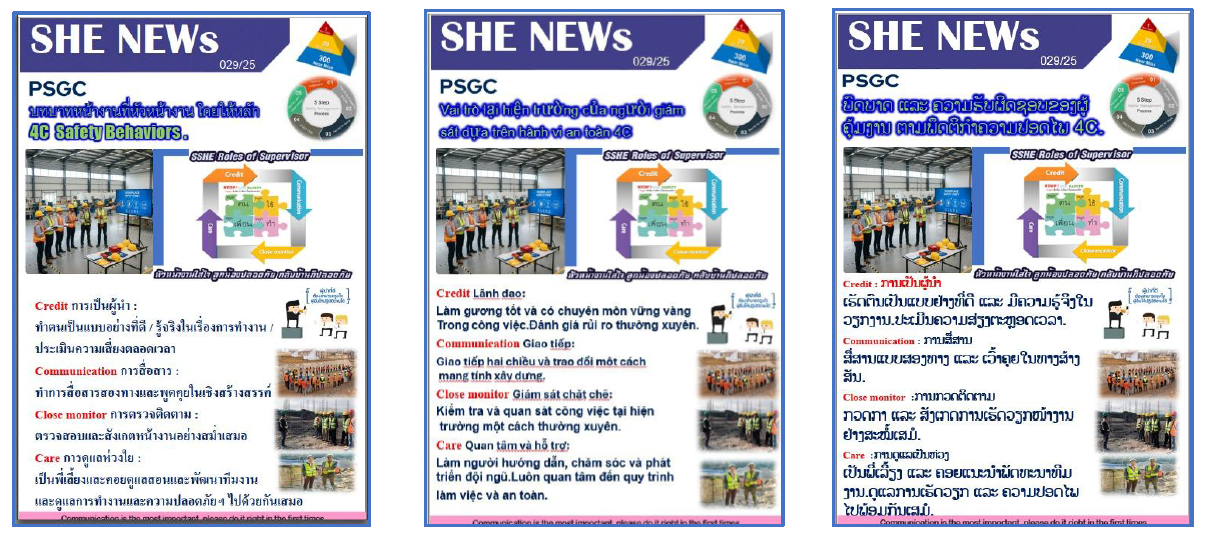 The 4C framework for site supervisors consists of:
Credit - Demonstrating leadership, serving as a role model, possessing strong work knowledge, and continuously assessing potential risks
Communication - Promoting two-way communication and constructive dialogue
Close monitor - Regularly monitoring and observing site activities
Care - Providing mentorship, supporting team development, and ensuring safe work practices
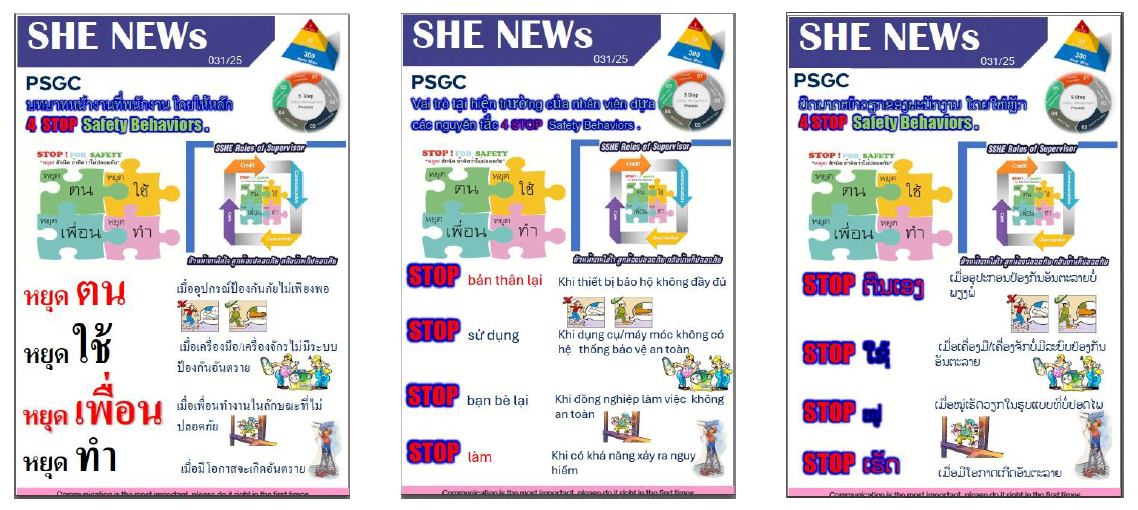 The 4 STOP framework for operational employees includes:
Stop Yourself – Stop work if adequate personal protective equipment is not available
Stop Using – Stop using tools or machinery that lack proper safety protection systems
Stop Friend – Stop co-workers if unsafe work behavior is observed
Stop Work – Stop work immediately when potential danger is identified
Plan Areas
| Plan Area |
|---|
| Fair employee compensation |
| Employee training and development |
| Promoting employee relations and participation |
| Migrant/foreign labor |
| Child labor |
| Occupational health and safety in workplace |
Employees — Workforce
Employees with Disabilities — Introduction
Pursuant to the Empowerment of Persons with Disabilities Act B.E. 2550 (2007), Section 33, and the Ministerial Regulations issued under this Act, employers or establishment owners in both the private and public sectors employing 100 or more employees are required to hire persons with disabilities who are capable of working, regardless of position. The prescribed ratio is one person with a disability for every 100 non-disabled employees. Where the remaining number of employees exceeds 50, an additional person with a disability must be employed.
At present, the Company’s total number of employees does not meet the threshold stipulated under the law; therefore, the Company is not currently subject to the mandatory employment requirement for persons with disabilities.
Workforce Data
| Metric | Current Year | Previous Year | Two Years Ago |
|---|---|---|---|
| Total number of employees (Persons) | 76 | 78 | 62 |
| Number of male employees (Persons) | 51 | 53 | 38 |
| Number of female employees (Persons) | 25 | 25 | 24 |
| Total employment of disabled persons (people) | 0 | 0 | 0 |
| Total disabled employees (people) | 0 | 0 | 0 |
| Total male disabled employees (people) | 0 | 0 | 0 |
| Total female disabled employees (people) | 0 | 0 | 0 |
| Total disabled workers who are non-employee (people) | 0 | 0 | 0 |
| Contributions to the fund for promoting and improving the quality of life for disabled persons | 0 | 0 | 0 |
| Total number of male employees in operational level (Persons) | 29 | 31 | 24 |
| Total number of male employees in management level (Persons) | 19 | 21 | 12 |
| Total number of male employees in executive level (Persons) | 3 | 1 | 2 |
| Total number of female employees in operational level (Persons) | 17 | 16 | 15 |
| Total number of female employees in management level (Persons) | 5 | 7 | 7 |
| Total number of female employees in executive level (Persons) | 3 | 2 | 2 |
Employees — Remuneration & Provident Fund
Remuneration & Provident Fund
| Metric | Current Year | Previous Year | Two Years Ago |
|---|---|---|---|
| Total disabled employees (people) | 128,744,334.46 | 112,219,205.58 | 85,409,753.91 |
| Total male employee remuneration (Baht) | 90,959,025.14 | 74,345,694.25 | 47,962,541.96 |
| Total female employee remuneration (Baht) | 37,785,309.32 | 37,873,511.33 | 37,447,211.95 |
| Number of employees eligible to participate in PVD (persons) | 72 | 66 | 57 |
| Total number of employees joining employee provident fund (Persons) | 63 | 60 | 52 |
| Percentage of total number of employees joining employee provident fund to total number of employees (%) | 82.89 | 76.92 | 83.87 |
| Number of PVD members / Total eligible employees (%) | 87.5 | 90.91 | 91.23 |
| Total amount of provident fund contributed by the Company (Baht) | 3,961,102.65 | 2,757,860 | 2,256,971.27 |
| Total amount of provident fund contributed by employee (baht) | 5,115,969.15 |
Employees — Training & Development
Training Data
| Metric | Current Year | Previous Year | Two Years Ago |
|---|---|---|---|
| Average employee training hours (Hours / Person / Year) | 28.92 | 36.65 | 17.4 |
| Employee development and training expenses (baht) | 408,938.91 | 602,467 | 660,000 |
Employees — Occupational Health & Safety
Occupational Health & Safety Data
| Metric | Current Year | Previous Year | Two Years Ago |
|---|---|---|---|
| Total number of lost time injury incidents by employees (Cases) | 0 | 0 | 0 |
Employees — Labour Relations
Labour Relations Data
| Metric | Current Year | Previous Year | Two Years Ago |
|---|---|---|---|
| Total voluntary resignations (Persons) | 14 | 7 | 12 |
| Male employees who voluntary resigned (Persons) | 11 | 4 | 10 |
| Female employees who voluntary resigned (Persons) | 3 | 3 | 2 |
| Percentage of employee turnover leaving the Company voluntarily (%) | 18.42 | 10.3 | 19.9 |
| Evaluation result of employee engagement | 0 | 0 | 0 |
Employees — Employee Representation
Employees Are Represented Collectively
Yes
Forms of Representation
| Form |
|---|
| Welfare committee |
Employees — Targets
Has Set Employee Targets
Yes
Targets
| Indicator | Target Areas | Base Year | Base Year — Description | Target Year | Target Year — Description |
|---|---|---|---|---|---|
| Training Hours | 2984 · Description: Employee training and development | 2,025 | Training hours: 12 hours per employee per year. | 2,025 | Training hours: 12 hours per employee per year. |
| Coverage and assessment of employee participation. | 2985 · Description: Promoting employee relations and participation | 2,025 | Covers all employees, with a participation assessment score of 60–65%. | 2,025 | Covers all employees, with a participation assessment score of 60–65%. |
| Zero reported cases of human rights violations. | 2990 · Other name: The reported cases of human rights violations. · Description: Others | 2,025 | Zero reported cases of human rights violations. | 2,025 | Zero reported cases of human rights violations. |
| Proportion of human rights risk assessment coverage. | 2990 · Other name: The Company’s operations have undergone a human rights risk assessment. · Description: Others | 2,025 | Human rights risk assessment covers 100% of operations. | ||
| Coverage of mitigation measures for key human rights issues. | 2990 · Other name: Implementation of mitigation measures for key human rights issues. · Description: Others | 2,025 | Mitigation measures for key human rights issues cover 100% of relevant areas. | ||
| Lost-time injury rate and work-related fatality rate. | 2988 · Description: Safety and occupational health at work | 2,025 | Lost-time injury rate and work-related fatality rate remain at zero. |
Employees — Performance & Outcomes
Has Performance Results
Yes
Performance Description
In 2025, the Company continued to implement its human resource management practices in alignment with its workforce planning and business direction. Key performance outcomes in employee and labor management are summarized as follows.
Recruitment and Hiring
The Company recruited and hired new employees in accordance with its workforce planning and business expansion needs. During the reporting year, the Company hired 12 new employees, representing a 50% decrease compared with 2024.
Performance Evaluation
The Company conducts annual performance evaluations through its Performance Management System (PMS). In 2025, performance evaluations covered 100% of employees who had been confirmed as permanent employees.
Following the evaluation process, supervisors were encouraged to communicate evaluation results to their subordinates and provide constructive feedback to support continuous performance improvement. This approach aims to help employees further develop their capabilities and contribute effectively toward achieving the Company’s operational goals.
Employee Skills and Capability Development
The Company continued to promote employee capability development in accordance with its training plans. As a result, the average training hours reached 28.9 hours per employee per year, exceeding the Company’s training target. Details of key training initiatives are summarized as follows.
3.1 Orientation and Legal Regulations Training for New Employees
The Company organizes orientation programs for new employees on their first day of work. In 2025, 12 new employees participated in the orientation program, representing 100% of all new hires.
3.2 Core Competency Development Programs
Several training programs were implemented to strengthen employee competencies, including:
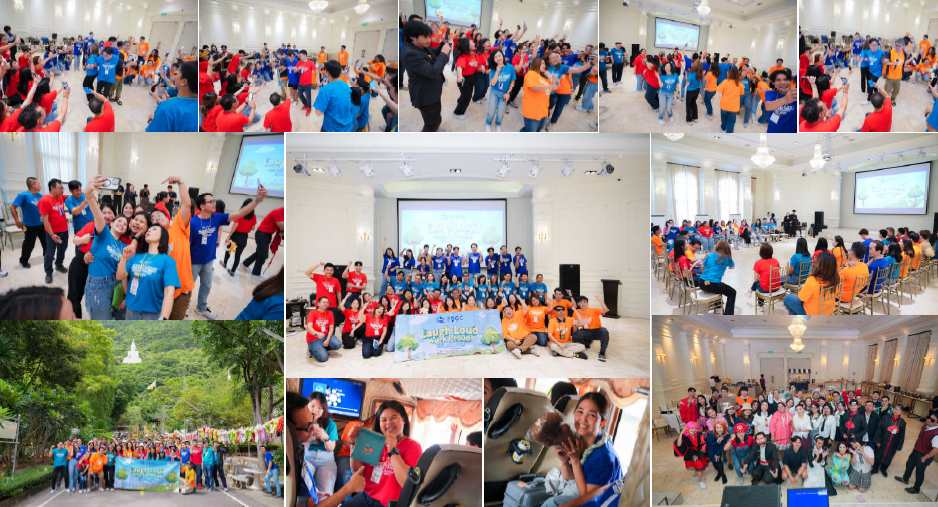
Team Building Program under the course “Mindset for Collaborative and Successful Teamwork” for head office employees. A total of 50 employees participated, representing 96% of all employees.
Human-AI Collaboration for Productivity, Insight & Impact, designed to enhance employees’ ability to utilize AI tools to improve productivity and work efficiency. A total of 30 employees participated, representing 100% of the target employee group.
Occupational health and safety training was provided to all new employees, covering 100% of newly hired employees.
Based on feedback collected during the reporting year, employees expressed satisfaction with the training programs and reported that the knowledge gained from the training could be effectively applied to their work. These outcomes reflect the effectiveness of the Company’s employee development initiatives in supporting both employee growth and organizational performance.
Employee Motivation and Engagement
The Company conducted surveys to assess employee satisfaction with the internal activities organized to strengthen employee participation and engagement. Key initiatives implemented during the year include:
Happy Activity Programs:
The Company organized various activities to promote employee well-being and engagement, including evening exercise classes after working hours, activities to celebrate the Songkran festival such as traditional water-pouring ceremonies for senior management, team-based step and running challenges to promote health awareness, and gift exchange activities during the New Year celebration.
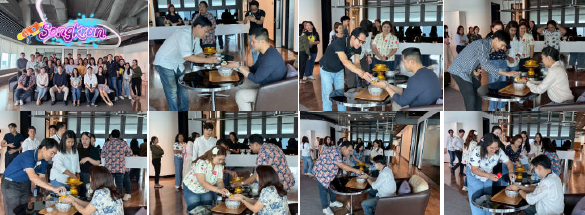
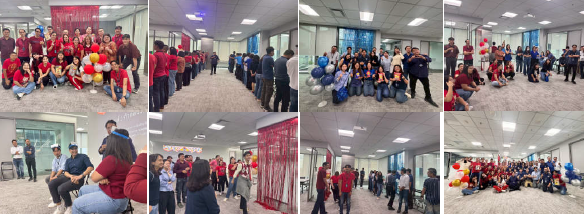

Company Outing:
To promote employee well-being and work-life balance, the Company organized outing activities that provide opportunities for employees to relax, socialize, and strengthen relationships with colleagues outside the workplace.
Occupational Health and Safety
The Company’s commitment to fostering a strong safety culture has contributed to achieving its occupational safety targets. During the reporting year, the Lost Time Injury Rate (LTIFR) and work-related fatality rate remained at zero.
Safety training programs were also provided to employees and subcontractors working on construction projects. Details of safety training activities are summarized as follows:
XPPL Expansion Phase 1 Project
Period: 1 January – 31 December 2025. A total of 146 participants attended training programs, all of whom were subcontractors (100%). This is because the project was in its final phase, and company employees assigned to the project had already completed the required training in the previous year.
Resettlement Development Project
Period: 1 January – 31 December 2025. A total of 1,272 participants attended training programs, comprising 4% company employees and 96% subcontractors.
Note: Participants in safety training programs mainly consisted of subcontractors, as they are the primary workforce responsible for operational activities in both construction projects.
Based on the Company’s human resource management practices during the reporting year, no incidents related to employee rights violations, sexual harassment (verbal or physical), or discrimination within the organization were reported.
Customers — Plan & Guidelines
Has a Customer Management Plan
Yes
Plan Description
The Company believes that building trust and maintaining strong relationships with customers are key factors in supporting sustainable business growth over the long term. PSGC therefore places importance on maintaining quality standards in its construction services across all stages of project execution. The Company also actively seeks and considers feedback from customers in order to continuously improve its operations and enhance service delivery to better meet customer expectations.
To maintain service standards and strengthen customer confidence, the Company has established customer management practices covering the following key areas.
Responsible Products and Services
PSGC recognizes that quality, safety, and operational standards are critical factors in maintaining customer confidence. Failure to meet expected service standards could negatively affect customer relationships, the Company’s reputation, and long-term business opportunities.
The Company therefore places strong emphasis on ensuring that construction services are delivered with a focus on quality and safety. Project operations are conducted in accordance with the ISO 9001:2015 Quality Management System, which provides a framework for controlling operational processes and ensuring that the Company’s construction services meet internationally recognized quality standards and are delivered in line with customer requirements.
Communication and Disclosure of Information to Customers
The Company places importance on transparent, honest, and fair communication with its customers. PSGC strives to provide accurate, clear, and sufficient information regarding its services and project operations so that customers are able to make informed decisions in their business engagements with the Company.
The Company avoids providing misleading or inaccurate information regarding its services and adheres to responsible business practices in its communications with stakeholders.
Throughout the project lifecycle, PSGC maintains regular communication with customers to provide updates on project progress and to receive feedback, suggestions, and concerns. This communication process enables the Company to continuously improve its operations and ensure that project delivery meets agreed requirements and customer expectations.
Customer Satisfaction and Relationship Management
PSGC places importance on strengthening long-term relationships with its customers by maintaining consistent service standards and responding appropriately to customer needs.
The Company monitors project performance and gathers feedback from customers during project execution in order to assess customer satisfaction. Feedback received from customers is considered as part of the Company’s efforts to improve operational processes and enhance service quality.
These practices support the continuous improvement of the Company’s services and contribute to maintaining positive long-term relationships with customers.
Customer Data Privacy and Protection
PSGC recognizes the importance of protecting customer personal data. The Company has established practices and measures governing the collection, use, and disclosure of personal data in accordance with the Personal Data Protection Act B.E. 2562 (2019) (PDPA).
Measures have been implemented to control access to information, manage data storage, and ensure the security of customer data. These measures are intended to ensure that customer information is protected and maintained with appropriate confidentiality in accordance with the Company’s data protection standards.
Plan Areas
| Plan Area |
|---|
| Responsible production and services for customers |
| Communication of product and service impacts to customers/consumers |
| Development of customer satisfaction and customer relationship |
| Protection of customer personal information |
Customers — Satisfaction Results
Customer Satisfaction Results
| Metric | Current Year | Previous Year | Two Years Ago |
|---|---|---|---|
| Evaluation results of customer satisfaction | 1 | 1 | 1 |
Customers — Targets
Has Set Customer Targets
Yes
Targets
| Indicator | Target Areas | Base Year | Target Year | Target Year — Description |
|---|---|---|---|---|
| customer satisfaction score | 3009 · Description: Development of customer satisfaction and customer relationship | 2,025 | 2,025 | Attain a customer satisfaction score exceeding 80.0% |
| the case of complaints related to violations of consumer rights | 3007 · Description: Responsible production and services for customers | 2,025 | 2,025 | Ensure zero complaints related to violations of consumer rights. |
| The case of reported incidents of cybersecurity breaches or customer data leaks. | 3010 · Description: Consumer data privacy and protection | 2,025 | 2,025 | Maintain zero reported incidents of cybersecurity breaches or customer data leaks. |
Customers — Performance & Outcomes
Has Performance Results
Yes
Performance Description
In 2025, PSGC continued to implement its customer management approach in accordance with the Company’s policies and operational practices, with the objective of maintaining service standards and strengthening customer confidence. Key performance outcomes relating to customer management are summarized as follows.
Responsible Products and Services
To reinforce its commitment to maintaining consistent service quality, the Company continues to operate under the ISO 9001:2015 Quality Management System.
PSGC has been certified by the Management System Certification Institute (Thailand) (MASCI) for the period 2022–2025, covering its construction service operations. This certification supports the Company’s efforts to maintain operational standards in line with both national and international requirements and provides assurance to customers that construction services are delivered under an appropriate quality management framework.
Customer Data Privacy and Protection
The Company places importance on the protection of customer personal data and the security of information systems. Internal policies and practices have been established to support appropriate data management and information security. Key policies implemented by the Company include:
Personal Data Protection Policy
This policy establishes internal practices for the collection, use, disclosure, and processing of personal data relating to the Company’s stakeholders, including customers. It aims to ensure that personal data is managed in a secure and appropriate manner, in compliance with applicable laws and relevant data protection practices.
Information Security PolicyThe Company has established an information security policy to guide the management of its information systems, including data classification, access control, and periodic review of security measures. These practices are intended to enhance data security and ensure the reliability of the Company’s information systems.
In 2025, no incidents relating to data security breaches or customer data leakage were reported, in line with the Company’s target.
Communication of Information to Customers
PSGC places importance on transparent and responsible communication with customers. The Company has established guidelines for employees responsible for customer engagement to ensure that information regarding project execution and services is communicated accurately, clearly, and appropriately.
In 2025, no complaints were reported relating to violations of customer rights or inappropriate or misleading communication regarding the Company’s services, in line with the Company’s target.
Customer Satisfaction and Relationship Management
The Company continues to monitor and assess customer satisfaction in key construction projects as part of its efforts to enhance service quality and strengthen long-term customer relationships. Customer satisfaction results for key projects are as follows:
XPPL Project, Sekong Province, Lao PDR
Customer satisfaction has been assessed since the commencement of the project in 2022. The project recorded a satisfaction score of 88.0% in 2024, increasing to 90.8% in 2025.
Resettlement Development Project
This project commenced in 2024, with its first customer satisfaction assessment conducted at the end of 2024, resulting in a score of 82.7%. In 2025, the satisfaction score was 80.8%.
In addition, the Company plans to expand customer satisfaction assessments to cover all construction projects, as well as future business operations, in order to systematically analyze the results and develop improvement plans aimed at enhancing customer satisfaction in the long term.
Community & Social — Plan & Guidelines
Has a Community & Social Plan
Yes
Plan Description
PSGC is committed to conducting its business alongside the improvement of community and societal well-being. The Company recognizes that construction activities may have impacts on surrounding communities, including economic, social, and quality-of-life aspects of people in the project areas.
The Company therefore places importance on systematically managing community-related impacts, while fostering positive relationships with local communities through responsible business practices. At the same time, PSGC supports long-term community development in areas where it operates, both in Thailand and the Lao PDR.
This approach is aligned with sustainable development principles and disclosure practices under the Global Reporting Initiative (GRI) Standards in relation to community and social impacts. The Company’s community and social management approach is structured into two main areas, as follows.
Community and Social Management within Business Processes (CSR in Process)
PSGC places importance on managing potential impacts on communities arising from construction activities. The Company aims to mitigate negative impacts while contributing positively to community development alongside its business operations. Key areas of implementation include:
Employment and Skills Development
The Company promotes the employment of local workers in project areas to create economic opportunities for surrounding communities. In addition, PSGC supports the development of work-related skills relevant to construction activities in order to enhance workforce capabilities over the long term.
Occupational Health, Safety, and Community Well-being
The Company implements safety measures in project areas to reduce risks and potential impacts on surrounding communities. These measures include the installation of traffic and safety signage in construction zones and along access routes to enhance safety for community members.
Reduction of Social Inequality
PSGC supports economic development and quality of life in project areas, with the aim of contributing to the reduction of social inequality. This is achieved through creating employment opportunities and improving access to essential resources within local communities.
Community and Social Management beyond Business Processes (CSR after Process)
In addition to managing operational impacts, the Company emphasizes maintaining strong relationships with communities through ongoing corporate social responsibility (CSR) activities. Key areas of implementation include:
Education Support
The Company supports educational development in local communities through the provision of educational materials and learning equipment, aiming to enhance access to education for youth in project areas.
Promotion of Religion and Culture
PSGC regularly participates in and supports local religious and cultural activities in order to preserve local traditions and strengthen relationships with the community.
Sports and Recreation
The Company supports sports and recreational activities, including the provision of sports equipment, to promote health and well-being among community members.
Plan Areas
| Plan Area |
|---|
| Employment and professional skill development |
| Education |
| Religion and culture |
| Sports and recreation |
| Occupational health, safety, health, and quality of life |
| Reducing inequality and promoting social equality |
Community & Social — Targets
Has Set Community & Social Targets
Yes
Targets
| Indicator | Target Areas | Base Year | Target Year | Target Year — Description |
|---|---|---|---|---|
| the case of conflicts or disputes | 3045 · Other name: Ensure zero conflicts or disputes arising from the operations · Description: Others | 2,025 | 2,025 | Ensure zero conflicts or disputes arising from the operations |
Community & Social — Performance & Outcomes
Has Performance Results
Yes
Performance Description
In 2025, PSGC continued to implement its community and social management approach, focusing on mitigating impacts arising from construction activities while supporting improvements in the quality of life of communities surrounding its project areas. Key performance outcomes are summarized as follows.
Community and Social Management within Business Processes (CSR in Process)
The Company implemented measures to mitigate potential impacts on communities arising from construction activities, particularly in relation to safety and the well-being of people in surrounding areas.
PSGC installed traffic warning and safety signage in construction areas and along project-related access routes to reduce risks associated with shared road usage between project operations and local communities.
In addition, the Company promoted the employment of local workers in project areas to create economic opportunities for surrounding communities, while supporting the development of construction-related skills. These efforts contribute to enhancing workforce capabilities and supporting local economic development over the long term.
Community and Social Management beyond Business Processes (CSR after Process)
In 2025, the Company carried out a corporate social responsibility (CSR) activity to support community development in areas surrounding its project sites, with a focus on education and youth well-being.
PSGC provided educational materials and sports equipment to Lat Keum School, located in Ban Lat Keum, Nga District, Oudomxay Province, Lao PDR. The school has a total of 85 students, ranging from kindergarten to Grade 5, and is located approximately 3 kilometers from the Company’s Lat Keum construction project.
This initiative aimed to support access to education, promote youth development, and encourage health and well-being through sports activities, in alignment with the Company’s long-term community development approach.
Law Violation Incidents
Law Violation Incidents
| Metric | Current Year | Previous Year | Two Years Ago |
|---|---|---|---|
| The total number of cases or incidents of significant violations of laws or regulations regarding social and human rights (Cases) | 0 | 0 | 0 |
| The total number of cases or incidents that cause significant labor disputes (Cases) | 0 | 0 | 0 |
| The total number of cases or complaints related to consumer rights violations (Cases) | 0 | 0 | 0 |
| The total number of cases or complaints related to partner rights violations (Cases) | 0 | 0 | 0 |
| The total number of cases or incidents that cause disputes with the community/society (Cases) | 0 | 0 | 0 |
| The total number of cases or incidents related to cyber security or customer data breaches (Cases) | 0 | 0 | 0 |
| The total number of cases or incidents related to safety and occupational health at work (Cases) | 0 | 0 | 0 |